Austrian Traded Index Guide 2025: Essential Insights
On this page
Interest in the austrian traded index is soaring as investors worldwide seek new opportunities in European stock markets. Austria’s position at the crossroads of Central Europe makes its main stock benchmark especially influential for 2025.
Why is the ATX drawing attention? It acts as a barometer for Austria’s economic vitality and reflects broader European trends. Whether you’re a trader or a long-term investor, understanding the austrian traded index is key to navigating Austria’s dynamic market landscape.
In this guide, you’ll discover ATX fundamentals, upcoming trends, index composition, historical performance, actionable strategies, and essential trading tools. Equip yourself to make smarter decisions and capitalize on Austria’s market momentum.
Understanding the Austrian Traded Index (ATX)
The Austrian Traded Index, or ATX, stands at the heart of Austria’s financial market. For any investor or trader looking at European equities in 2025, understanding this index is essential. The ATX offers a snapshot of Austria’s economic landscape, influencing global investment decisions and reflecting the pulse of Vienna’s stock exchange.
What is the ATX?
The Austrian Traded Index is Austria’s primary stock market index, tracking the top 20 companies listed on the Wiener Börse. Unlike total return indices, the ATX is a price index, meaning it reflects only price movements and excludes dividends. First introduced in 1991, the ATX has evolved alongside Austria’s economy, becoming a trusted barometer for national economic health.
Compared to indices like Germany’s DAX or the UK’s FTSE, the ATX is smaller but highly influential within its market. Its performance often mirrors shifts in Austria’s economic outlook, making it a key reference for both local and international investors. To dive deeper into its background and ongoing significance, see the Austrian Traded Index Overview.
ATX Composition and Sectors
The austrian traded index covers a diverse range of sectors, though some play a bigger role than others. The main sectors represented are:
- Financials (e.g., Erste Bank, Raiffeisen International, BAWAG)
- Utilities (e.g., Verbund)
- Industrials (e.g., Andritz, Voestalpine)
- Basic industries
- Consumer products
Financials and industrials usually dominate, shaping the index’s risk and return profile. Recent years have seen shifts in sector weights, especially as market trends and economic cycles change. When financials perform well, the ATX tends to rise sharply, but this also means higher volatility during sector downturns.
ATX Calculation and Methodology
The austrian traded index uses a free-float market capitalization weighting system. This means companies with higher market value and more freely traded shares have a bigger influence. The ATX is reviewed quarterly, with a more comprehensive overhaul once a year. To be included, companies must meet strict criteria for liquidity, market cap, and trading volume.
For example, when a company’s market cap declines or trading activity drops, it risks removal. This ensures the ATX remains a true reflection of Austria’s blue-chip landscape. Methodological updates in recent years have helped keep the index relevant and reliable for tracking Austria’s top performers.
ATX vs. Other Regional Indices
How does the austrian traded index compare with its European peers? The ATX is smaller than the DAX, SMI, or Euro Stoxx 50, and it shows higher sector concentration, especially in financials and industrials. This can amplify both opportunities and risks for investors seeking regional diversification.
| Index | Market Size | Sector Focus | Volatility | Correlation with ATX |
|---|---|---|---|---|
| ATX | Small | Financials, Industrials | High | Moderate |
| DAX | Large | Industrials, IT | Moderate | High |
| SMI | Medium | Healthcare, Financials | Low | Moderate |
During global events, the ATX often reacts more sharply due to its concentrated structure. For investors, this means the index can offer both outsized gains and steeper declines, highlighting the need for careful strategy.
ATX Performance: Historical Trends and 2025 Outlook
The Austrian Traded Index has experienced dramatic cycles, reflecting both Austria’s economic landscape and the broader European market. Understanding its historical performance and what lies ahead in 2025 is essential for anyone considering exposure to the austrian traded index. Let’s break down the numbers, trends, and expert outlooks that shape the ATX story.
Annual Returns and Volatility
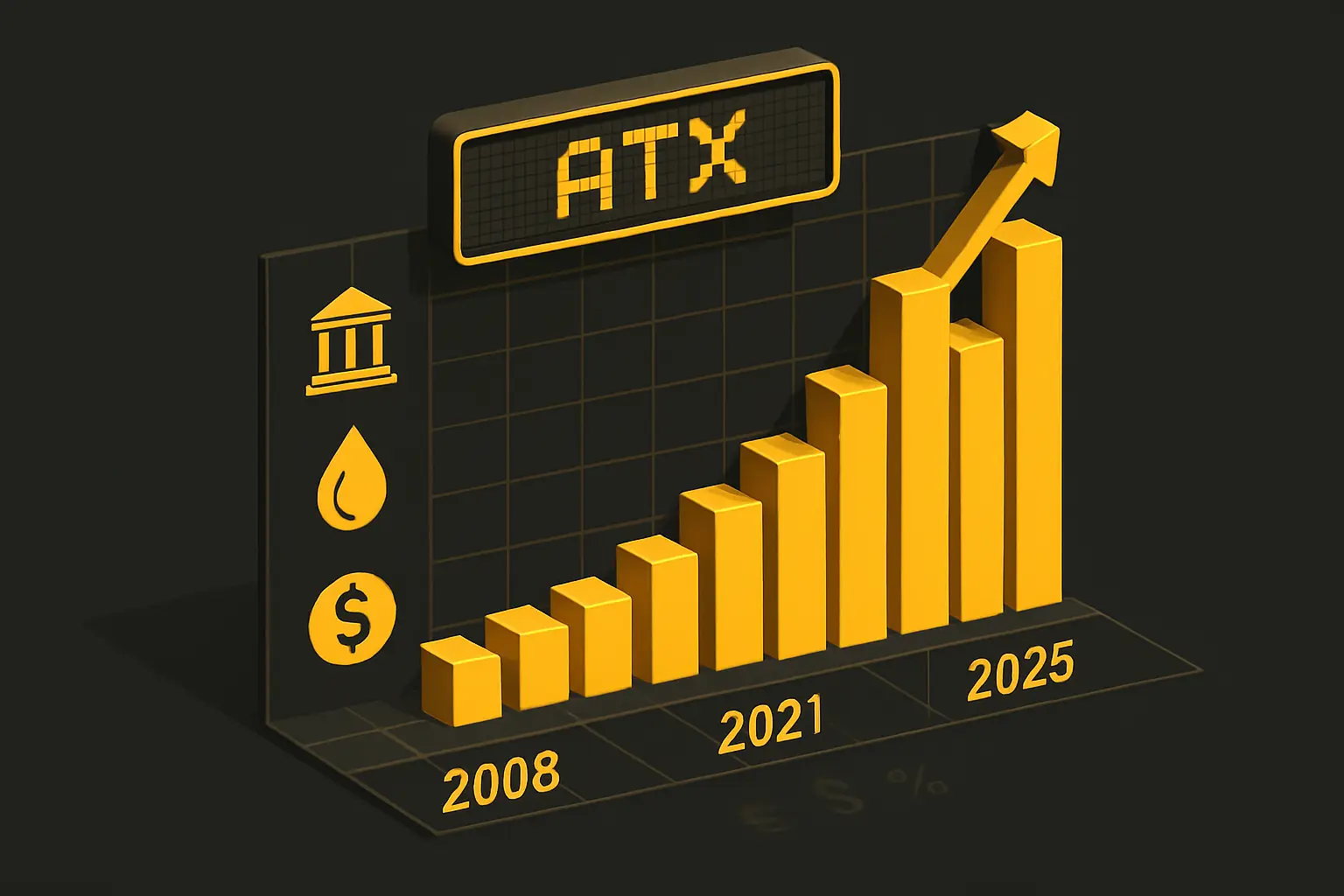
Since its inception, the austrian traded index has seen periods of both robust growth and sharp declines. Notably, the ATX suffered a major setback in 2008, dropping by 61.20% during the global financial crisis. In contrast, it surged by 50.82% in 2005 and posted an impressive 38.87% gain in 2021. These swings highlight the index’s sensitivity to global shocks and local developments.
| Year | Annual Return (%) | Notable Event |
|---|---|---|
| 2005 | +50.82 | Bull market surge |
| 2008 | -61.20 | Global financial crisis |
| 2021 | +38.87 | Post-pandemic recovery |
Volatility in the austrian traded index is often driven by international crises, shifts in Austria’s economy, and sector-specific events. For instance, energy price fluctuations and banking sector news can cause significant short-term moves.
ATX Performance in Recent Years
Between 2019 and 2023, the austrian traded index demonstrated resilience amid global uncertainty. The pandemic-induced downturn in 2020 was followed by a robust rebound in 2021, closing that year at 3,861.06. In 2022, the index fell to 3,126.39, reflecting inflation pressures and geopolitical tensions. By the end of 2023, it recovered to 3,434.97, buoyed by strong banking and energy stocks.
Key factors influencing recent returns include rising energy prices, the resilience of Austria’s financial sector, and ongoing global inflation. For example, in 2021, the ATX benefited from recovering consumer sentiment and a surge in demand for industrial exports. The austrian traded index continues to mirror both local and international economic themes.
2025 Market Outlook and Forecasts
Looking ahead, analysts are cautiously optimistic about the austrian traded index in 2025. Many expect moderate economic growth in Austria, influenced by favorable EU policies and stable interest rates. However, potential risks like a global recession or sector-specific disruptions remain on the radar.
According to the Vienna Stock Exchange Q1 2025 Report, the ATX reached new highs in early 2025, driven by strong performances in banking and utilities. Scenarios from Austrian and European analysts suggest that if global conditions remain stable, the austrian traded index could continue its upward trajectory, though volatility is expected to persist.
Key Drivers of ATX Movements
Movements in the austrian traded index are shaped by a mix of domestic and international factors. Austria’s GDP growth, consumer sentiment, and government policy have direct impacts. Meanwhile, EU regulations and global market sentiment can amplify or dampen index performance.
Sector-specific news, such as mergers and acquisitions, earnings surprises, or regulatory changes, can trigger sharp moves. For example, developments in the energy sector, like price shifts or new regulations, have a pronounced impact on major ATX constituents such as Verbund and OMV. The austrian traded index remains sensitive to both broad trends and company-level news.
Historical Patterns and What They Mean for 2025
The ATX’s history reveals clear cycles of boom and bust. Past recoveries, such as the strong rebound after 2008 and the post-pandemic rally in 2021, provide valuable lessons for investors. Historical data shows that patience and a focus on long-term trends can help weather volatility in the austrian traded index.
For 2025, investors can use these patterns to inform strategy, balancing short-term opportunities with the benefits of holding through cycles. The long-term track record of the austrian traded index suggests that disciplined investing often outperforms attempts to time the market.
ATX Components: Companies, Changes, and Sector Breakdown
The austrian traded index is shaped by its dynamic lineup of leading Austrian companies and evolving sector weights. Understanding the ATX’s components, recent changes, and sector breakdown is crucial for any investor or trader looking to navigate this market with confidence.
Current ATX Constituents (2025)
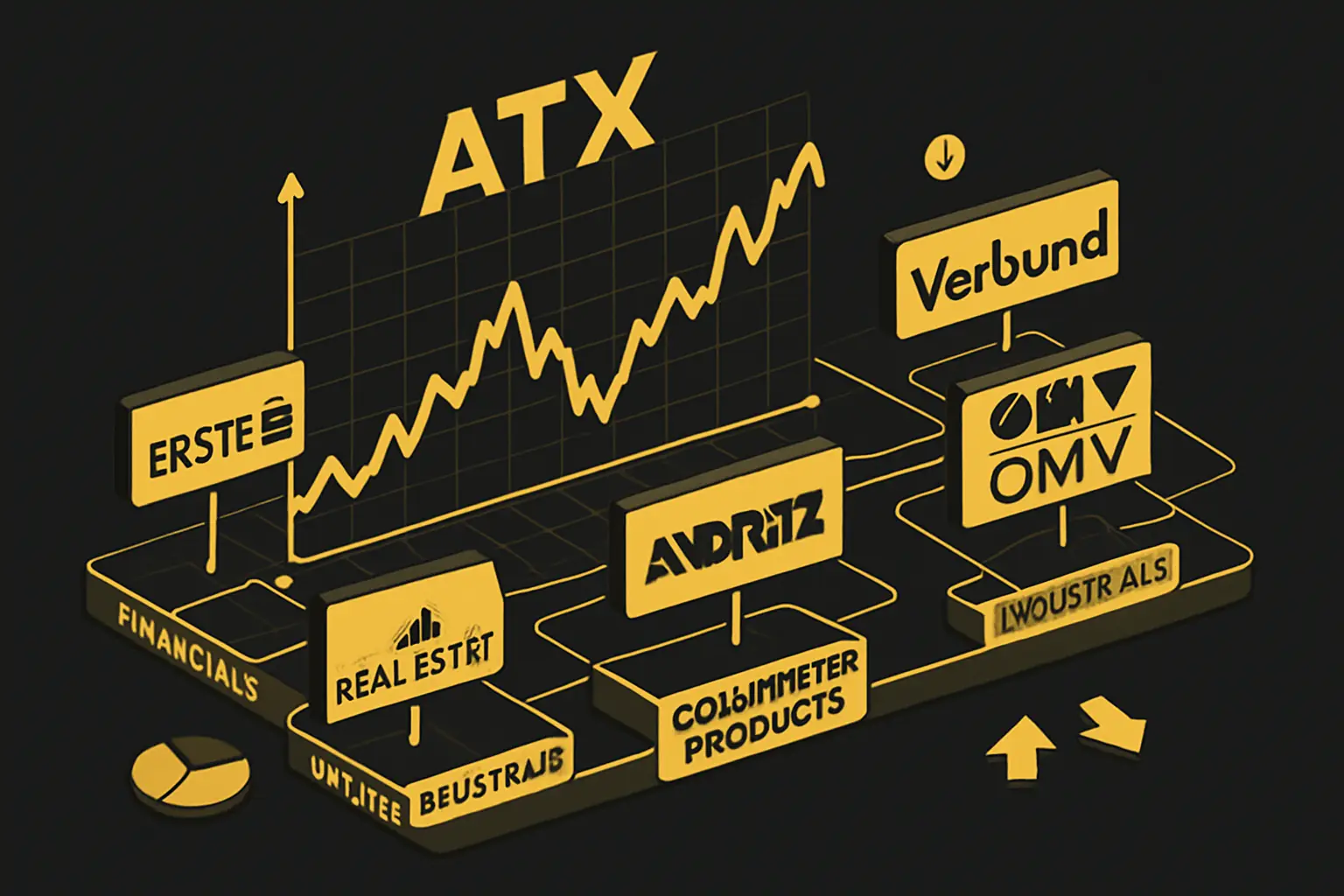
As of 2025, the austrian traded index features Austria’s 20 largest and most liquid companies. The index is dominated by financials, utilities, and industrials, reflecting the nation’s economic backbone. Key players include Erste Bank, Verbund, OMV, BAWAG, Andritz, Wienerberger, Voestalpine, and Raiffeisen International.
Here’s a quick sector allocation snapshot:
| Sector | Notable Companies | Weight (%) |
|---|---|---|
| Financials | Erste Bank, BAWAG, Raiffeisen | ~35 |
| Utilities | Verbund | ~15 |
| Industrials | Andritz, Voestalpine | ~25 |
| Real Estate | S IMMO, CA Immo | ~10 |
| Consumer/Other | Wienerberger, DO & CO | ~15 |
For example, Erste Bank’s strong performance often sways the entire austrian traded index, making company results directly impactful on ATX returns.
Recent Additions and Removals
The composition of the austrian traded index is not static. Since 2021, several companies have joined or exited the ATX, reflecting shifts in market cap and sector representation. Notable additions include S IMMO and Do & Co, while companies like Immofinanz have been removed after mergers or declining liquidity.
- Added: S IMMO, Do & Co
- Removed: Immofinanz, UNIQA (rebalancing), others
The criteria for these changes revolve around free-float market capitalization, liquidity, and sector balance. When a major company is removed, its sector weight often shifts, sometimes altering the index’s risk profile.
For the most up-to-date changes and candidates for future inclusion, investors can check the ATX Watchlist February 2025, which highlights potential adjustments to the austrian traded index lineup.
Sector Analysis: Strengths and Weaknesses
The austrian traded index leans heavily on financials, basic industries, and utilities. Financials and industrials have historically driven much of the index’s performance, while utilities provide a stabilizing influence.
- Strengths: Financials offer high liquidity and often benefit from economic growth. Utilities like Verbund provide steady returns and lower volatility.
- Weaknesses: Heavy sector concentration can limit diversification. Industrials may experience sharp swings during economic downturns.
For example, the utility sector’s stability during turbulent periods contrasts with the volatility seen in industrial stocks. While there is some diversification within the austrian traded index, its sector makeup means investors must be mindful of concentration risks.
Company Spotlight: Leading ATX Constituents
Three companies stand out within the austrian traded index: Verbund, OMV, and Erste Bank.
- Verbund: Austria’s largest utility, a leader in renewable energy, with a strong presence across Central Europe.
- OMV: A major player in oil, gas, and chemicals, OMV is critical to Europe’s energy supply and has expanded internationally.
- Erste Bank: As the largest financial institution in Austria, Erste Bank’s performance is a bellwether for the entire ATX.
Their combined market capitalization represents a significant portion of the index. OMV’s response to global energy trends, for instance, often sets the tone for the austrian traded index’s movement.
Companies Removed: Lessons and Implications
Many well-known companies have exited the austrian traded index since 2011, including Vienna International Airport, Strabag, Bwin, Intercell, and Telekom Austria. Reasons for removal include falling market cap, sectoral shifts, or mergers and acquisitions.
When a major player departs, the index can experience increased volatility or a shift in sector focus. The exit of Telekom Austria, for example, reduced the index’s exposure to telecommunications, changing its risk-return dynamics.
These changes highlight how the austrian traded index adapts to Austria’s evolving corporate landscape. For investors, tracking these shifts is essential for understanding both risks and opportunities within the ATX.
How to Invest in the Austrian Traded Index
Investing in the austrian traded index is more accessible than ever for both local and international investors. Whether you’re seeking direct exposure or exploring advanced strategies, there are several ways to participate in Austria’s premier stock index. Understanding your investment options is the first step toward building a portfolio that leverages the unique opportunities of the austrian traded index.
Direct Investment Options
The most straightforward way to invest in the austrian traded index is to purchase shares of its constituent companies directly through the Wiener Börse. This approach gives investors exposure to each company’s performance and dividends.
For those seeking simplicity and diversification, ATX ETFs are a popular choice. These funds track the austrian traded index, allowing you to own a basket of top Austrian stocks with a single trade. International brokers and online trading platforms often provide access to both individual stocks and ATX ETFs.
If you’re interested in learning more about different approaches, Index trading strategies explained offers a helpful overview of methods that can be applied when investing in the austrian traded index.
Indirect and Derivative Products
Advanced investors may consider indirect exposure through futures and options contracts based on the austrian traded index. These products allow sophisticated strategies, such as hedging against market declines or speculating on short-term movements.
Structured products, like certificates and warrants, also provide tailored access to index performance. Leveraged and short ATX products are available for those seeking amplified gains or protection during downturns. However, these instruments carry higher risk and require a solid understanding of how derivatives function within the austrian traded index ecosystem.
Portfolio Strategies for ATX Exposure
When building a portfolio around the austrian traded index, investors can choose between long-term buy-and-hold and active trading strategies. Buy-and-hold investors benefit from Austria’s economic stability and dividend potential. Active traders might pursue sector rotation, capitalizing on shifts between financials, utilities, and industrials.
Diversification is key. Pairing the austrian traded index with other European indices like the DAX can help balance sector and country-specific risks. For example, combining ATX and DAX holdings can smooth returns during regional market fluctuations.
Risks and Considerations for ATX Investors
Investing in the austrian traded index comes with unique risks. Market volatility, liquidity constraints, and currency fluctuations can impact returns, especially during global economic shocks. Austria-specific risks, such as regulatory changes or political events, may also affect the index’s performance.
Sector concentration is another consideration. The ATX is heavily weighted toward financials and industrials, which means downturns in these sectors can disproportionately affect your investment. Understanding these risks helps investors make informed decisions and better navigate the austrian traded index landscape.
Essential Tools, Data Sources, and Analysis for the ATX
To make informed decisions when trading or investing in the austrian traded index, having the right tools and reliable data sources is essential. The ATX’s dynamic nature demands up-to-date information and a mix of analytical approaches. Let’s explore where to find high-quality data, how to analyze the ATX, and which statistics and news sources matter most.
Where to Track ATX Performance
Access to accurate and timely data is vital for anyone following the austrian traded index. The primary source for ATX data is the Wiener Börse website, which offers live prices, historical charts, and official index factsheets. Financial platforms like Bloomberg and Yahoo Finance also provide real-time or slightly delayed ATX quotes.
When tracking ATX performance, always note if the data is real-time or delayed. Real-time data is crucial for active traders, while investors may rely on end-of-day summaries. For research, the Vienna Stock Exchange ATX Overview is a trusted starting point, offering details on index movements, sector weights, and company changes.
Analytical Approaches for ATX
To analyze the austrian traded index effectively, combine both technical and fundamental analysis techniques. Technical analysis involves studying price charts, trend lines, support and resistance, and key indicators such as moving averages or RSI. This helps traders identify entry and exit points based on historical patterns.
Fundamental analysis looks at company earnings, sector performance, and macroeconomic data to gauge the broader outlook for the ATX. For those new to charting or looking for deeper insights, technical analysis for traders is a valuable resource that covers indicators and strategies relevant to the austrian traded index.
Must-Know ATX Statistics and Benchmarks
Tracking key statistics is crucial for benchmarking the austrian traded index. Important metrics include annual returns, volatility rates, and dividend yields. Comparing the ATX to other European indices helps investors understand its risk-return profile.
| Index | 2023 Return | Volatility | Dividend Yield |
|---|---|---|---|
| ATX | +9.87% | High | Moderate |
| DAX | +16.0% | Moderate | Moderate |
| Euro Stoxx 50 | +15.0% | Moderate | Moderate |
| SMI | +5.0% | Low | High |
For instance, in 2023, the ATX outperformed the SMI but lagged behind the DAX and Euro Stoxx 50, highlighting its unique characteristics and opportunities for investors.
Staying Updated: News and Regulatory Changes
Staying current with news and regulatory updates is key for anyone involved with the austrian traded index. Bloomberg, Wiener Börse, and financial news portals provide real-time updates on market events, earnings releases, and policy changes. Monitoring these sources helps investors react quickly to market-moving news.
It’s also essential to track regulatory updates from EU and Austrian authorities, as these can impact index composition or trading rules. For example, past regulatory changes have influenced ATX ETF structures and investor access, underlining the need for vigilance in a fast-changing environment.
Strategic Insights and Trading Tips for 2025
Navigating the austrian traded index in 2025 requires more than just market knowledge, it demands a strategic mindset. With shifting economic tides and sector dynamics, traders and investors need actionable insights to stay ahead. Below, we break down practical tips and tools to help you make the most of ATX opportunities this year.
Identifying ATX Opportunities in 2025
Spotting the right opportunities within the austrian traded index starts with sector focus. In 2025, banking, energy, and utilities are drawing attention due to Austria’s stable economy and the EU’s green initiatives. Watch for macroeconomic signals like inflation rates and central bank policy changes, they often trigger shifts in ATX performance.
For instance, a surge in energy prices could boost stocks like Verbund and OMV. Stay alert to EU policy changes, as these can quickly impact ATX sectors. By aligning your strategy with these signals, you’ll be better positioned to capitalize on emerging trends within the index.
Risk Management in ATX Trading
Risk management is essential for anyone trading the austrian traded index. Start by setting clear stop-loss levels to protect your capital from sudden downturns. Position sizing ensures you don’t overexpose yourself to volatile sectors, especially given the ATX’s concentration in financials and industrials.
Consider using derivatives such as ATX options to hedge against market swings. For example, protective puts can provide a safety net if the index faces a sharp decline. By consistently applying these risk controls, you can weather market uncertainty and pursue long-term growth.
Advanced Trading Tools for ATX
Leveraging advanced tools is key to succeeding in the austrian traded index. Modern charting platforms offer multi-timeframe analysis, allowing traders to spot both short-term trends and long-term cycles. Real-time alerts and signal services help you react quickly to market moves.
To sharpen your technical edge, explore Understanding trading chart patterns, which can help you interpret ATX price movements with confidence. Combining these tools with careful analysis empowers you to make timely, informed trading decisions.
Investor Profiles: Matching ATX Strategies to Goals
Your approach to the austrian traded index should reflect your personal goals. Long-term investors may favor buy-and-hold strategies or focus on dividend-paying ATX constituents for steady returns. Active traders might pursue sector rotation or capitalize on short-term volatility.
If diversification is your priority, consider combining ATX exposure with other European indices. For more on optimizing your portfolio, check out these portfolio diversification tips. Aligning your strategy with your profile ensures your investment plan fits your risk tolerance and objectives.
The Future of the Austrian Traded Index
The landscape for the austrian traded index is set for dynamic changes as we look toward 2025 and beyond. Evolving market structures, shifting economic drivers, and global investment flows will all influence its trajectory. For investors, understanding these future trends is vital for making strategic decisions.
Potential Reforms and Index Methodology Updates
Discussions are ongoing about refining how the austrian traded index is calculated. The index could see updates in sector representation or changes to weighting methods, aiming to better mirror Austria’s evolving economy. Past reforms, such as adjusting for free-float market cap, have enhanced transparency and relevance for both domestic and international investors.
Recent years have shown how methodology tweaks can impact index composition and volatility. If new reforms are implemented, they may encourage more balanced sector exposure and attract broader participation. For traders, these changes could open fresh opportunities and present new challenges in tracking the austrian traded index.
Austria’s Economic Outlook and Its Impact on ATX
Austria’s economic prospects play a crucial role in shaping the austrian traded index. GDP growth forecasts for 2025 are cautiously optimistic, fueled by government investments and EU integration efforts. The country’s focus on innovation and green technology is expected to bolster sectors like utilities and energy.
To gain more context on recent trends and what they might mean for the index’s future, investors can review Market Analysis: Half-Time 2024. This analysis highlights how policy changes and sector performance could influence the austrian traded index in the coming year.
Globalization and the ATX: International Investor Interest
International interest in the austrian traded index continues to grow. Foreign investors are increasingly seeking exposure to Austria’s blue-chip companies, integrating the ATX into their broader European strategies. The inclusion of ATX constituents in global ETFs and benchmarks has enhanced visibility and liquidity.
This globalization trend offers both advantages and risks. Greater participation can lead to higher trading volumes and improved price discovery. However, it also means the austrian traded index is more sensitive to global market swings and cross-border capital flows. Investors should monitor international developments closely.
Long-Term Trends and What to Watch Beyond 2025
Looking further ahead, several long-term trends could reshape the austrian traded index. Digitalization across industries, a stronger focus on ESG (environmental, social, and governance) criteria, and ongoing M&A activity are set to drive change. For example, Austria’s push for sustainability may alter the index’s sector composition, especially within utilities and industrials.
Investors in the austrian traded index should stay alert to sector transformations and regulatory shifts. By tracking these trends, they can position themselves for both resilience and growth as the market landscape continues to evolve.
Now that you’ve got a solid understanding of the Austrian Traded Index and how to approach the markets in 2025, it’s time to put that knowledge into action. Navigating trends, sector shifts, and economic signals is a lot easier when you have the right tools by your side. If you want to make confident, informed trading decisions, without all the guesswork, why not see how much difference real-time, adaptive signals can make? You deserve to trade smarter, not harder. See Your Trading Improve With PipTrend
Risk Disclaimer: Trading involves risk. Past performance doesn't guarantee future results. Only trade with money you can afford to lose. PipTrend is a tool to assist your trading decisions, not financial advice.