AI Trading Guide: Mastering Automated Markets in 2026
On this page
Imagine executing flawless trades 24/7, with ai trading systems that instantly adapt to every shift in the market. The financial world is transforming at lightning speed, and automated intelligence is now at the core of this evolution.
This guide will show you how to master ai trading in 2026. You will explore the history of automation, discover essential tools, learn proven strategies, and understand risk management. Get a glimpse into the trends shaping the future of automated markets.
Ready to lead the next wave? Dive in to discover how ai trading can analyze data, optimize strategies, and give you a measurable edge. Follow this comprehensive guide to elevate your trading and stay ahead in the fast-changing markets.
The Evolution of AI Trading: From Algorithms to Autonomous Markets
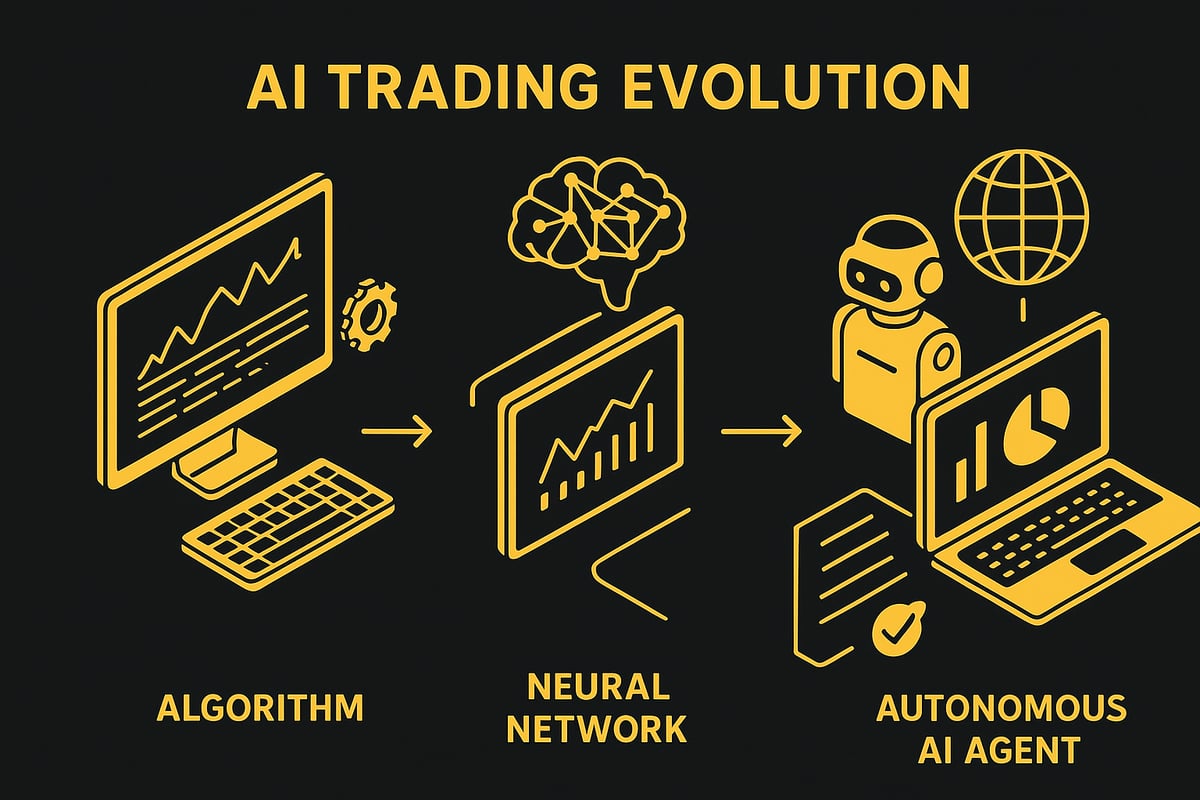
Step back to the early days when ai trading consisted mostly of simple scripts executing basic rules. These early systems could automate orders, but they lacked the sophistication to adapt as markets changed or to process complex data. Still, they laid the groundwork for a revolution in how financial markets operate.
As technology advanced, several key milestones reshaped ai trading. The adoption of machine learning allowed systems to recognize patterns in vast amounts of data. Soon after, deep learning introduced neural networks capable of handling nonlinear relationships, opening doors to more accurate predictions. Reinforcement learning then pushed boundaries further, creating self-improving agents that learned optimal strategies through trial and error.
Today’s ai trading bots are far more than automated rule-followers. They manage multi-asset portfolios, including stocks, forex, crypto, and indices, with minimal human intervention. These systems are adaptive, learning from market feedback and continuously refining their strategies. The shift from static, rule-based logic to dynamic, data-driven models marks a true leap in capability.
The impact of cloud computing and big data has been transformative for ai trading. Massive datasets can now be processed in real time, enabling global operations and instant decision-making. For instance, Tickeron’s AI bots demonstrate real-time pattern recognition across hundreds of assets, reportedly delivering over 200 percent annualized returns in 2025. AI agents now autonomously manage S&P 500, NASDAQ, and FOREX portfolios, showcasing the scalability and reach of these technologies.
Regulatory and ethical considerations have also evolved alongside the technology. As ai trading systems become more autonomous, regulators focus on transparency, accountability, and market stability. New frameworks address concerns about data privacy, algorithmic bias, and responsible AI use. The coming years will see ongoing debate about the right balance between innovation and oversight, ensuring ai trading continues to benefit both traders and the markets as a whole.
For a deeper look into how these innovations are shaping today’s markets, explore AI and Trading Innovations.
Core Components of Modern AI Trading Systems
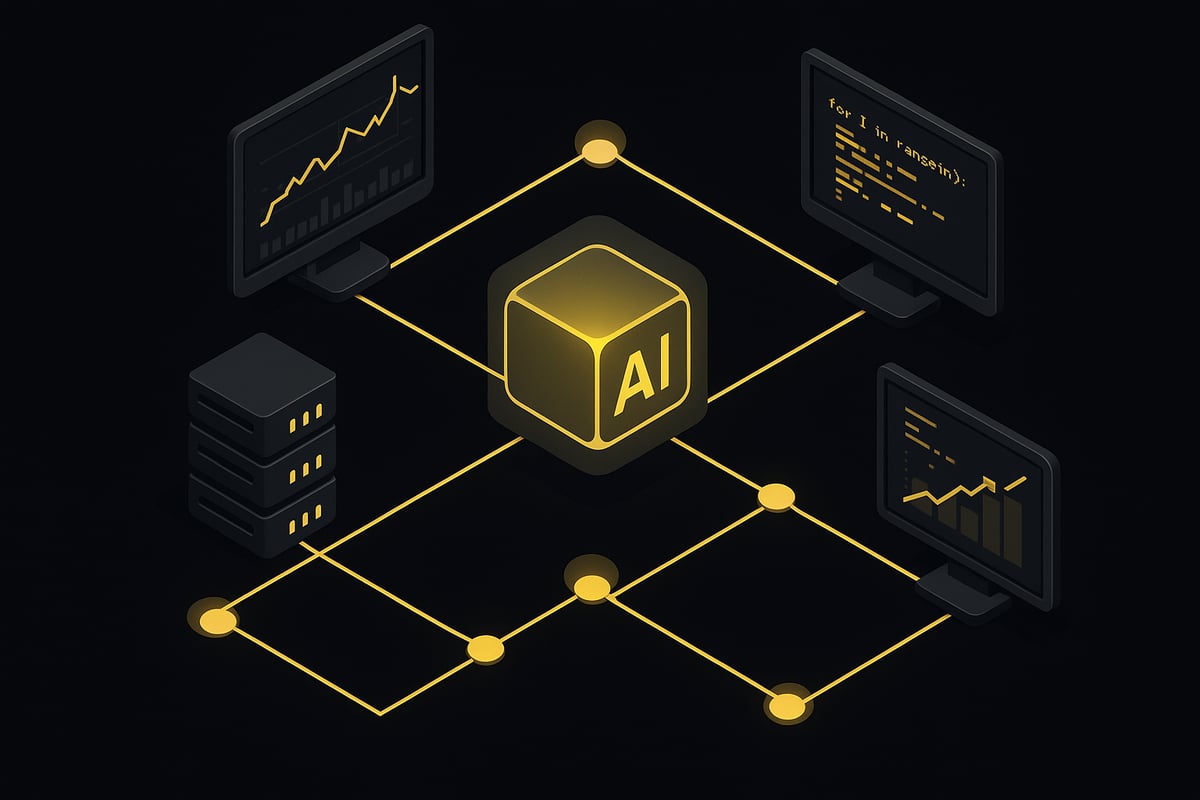
Modern ai trading systems are intricate ecosystems, combining data engineering, advanced machine learning, and robust real-time execution. Understanding each core component is essential for building reliable, profitable automated strategies.
Data Acquisition and Preprocessing
Reliable ai trading starts with quality data. Every model depends on accurate, timely inputs. Traders use APIs from platforms like TradingView and Tickeron to pull real-time and historical prices, order book depth, and news sentiment.
Raw data is rarely ready for modeling. Data wrangling involves cleaning, handling missing values, and normalizing time-series data. For example, Udacity’s curriculum emphasizes using Pandas for merging, filtering, and transforming datasets. Exploratory data analysis (EDA) uncovers trends and anomalies, guiding feature engineering.
Security and privacy are vital. Automated systems encrypt sensitive data and comply with regulations to protect user information. Ultimately, robust data pipelines enable ai trading systems to learn and adapt efficiently.
Machine Learning Models and Strategy Development
Machine learning is the heart of ai trading. Supervised models, such as regression and classification algorithms, predict price movements or generate buy/sell signals. Unsupervised techniques cluster similar assets or detect anomalies in market behavior.
Reinforcement learning stands out for its ability to create self-improving agents. These agents learn optimal trading actions by receiving feedback from simulated or live environments. Udacity’s hands-on projects guide learners through building RL agents and momentum-based models, emphasizing practical skills.
Cross-validation ensures strategies perform well on unseen data. Avoiding overfitting and underfitting is crucial for robust ai trading, as overly complex models can fail in real markets. Consistent evaluation and iteration lead to more reliable outcomes.
Backtesting, Optimization, and Deployment
Before risking capital, every ai trading strategy undergoes rigorous backtesting. Walk-forward validation simulates live trading by repeatedly testing strategies on new out-of-sample data, ensuring adaptability. Key metrics include annualized returns, Sharpe, Sortino, and Calmar ratios, plus maximum drawdown.
Hyperparameter tuning and regularization techniques help optimize model performance while reducing risk. Deployment decisions involve choosing between cloud-based or on-premise infrastructure, considering latency and real-time execution needs. Leading platforms, such as Tickeron, offer brokerage integration, live trade tracking, and instant AI signal delivery.
Continuous monitoring is essential to detect model drift and maintain performance. Automated alerts and dashboards support rapid response to anomalies. To explore the latest in ai trading system design and deployment, the Trading AI Guide provides practical insights and resources.
| Component | Key Role | Example Tool |
|---|---|---|
| Data Pipeline | Feeds, cleans, and secures data | Pandas, TradingView API |
| ML Models | Generate predictions and signals | Scikit-learn, TensorFlow |
| Backtesting | Simulates and evaluates strategies | Backtrader, proprietary platforms |
| Deployment | Executes trades in live markets | Tickeron, custom brokers |
Each component is vital for maintaining the accuracy, reliability, and speed that define modern ai trading systems.
Step-by-Step Guide: Building and Mastering Your AI Trading Workflow
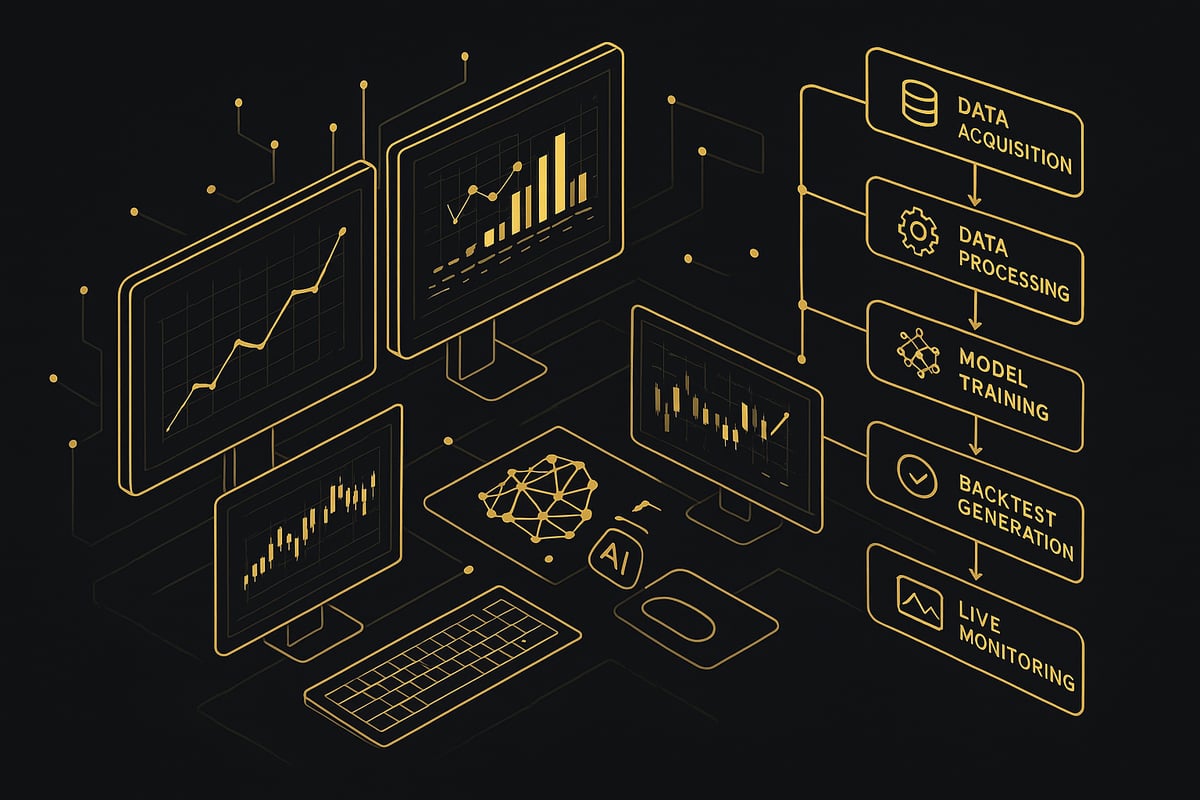
Embarking on your ai trading journey requires a systematic approach. By following a proven workflow, you can transform raw data and innovative algorithms into real, measurable trading results. Each step below is designed to help you build, deploy, and refine strategies that thrive in today’s automated markets.
Step 1: Define Trading Objectives and Select Markets
Success in ai trading begins with clear goals and boundaries. Start by assessing your risk appetite, available capital, and desired time horizon. Are you a day trader seeking quick gains, or do you prefer swing trading and longer-term positions? Consider which asset classes, stocks, forex, crypto, or indices, align with your interests and expertise.
Set measurable objectives for your ai trading strategy. For example, you might target a specific annualized return, limit maximum drawdowns, or focus on minimizing volatility. Tools like Tickeron offer filters tailored to different trading styles, helping you select the right market segments.
Before moving forward, document your goals and constraints. This clarity will guide every decision, from the data you collect to the models you deploy. For more inspiration and practical advice, check out AI in Trading Insights for a wide range of real-world examples and expert perspectives.
Step 2: Gather and Prepare Data
Reliable data is the backbone of ai trading. Begin by identifying trustworthy data sources and APIs that offer comprehensive historical and real-time feeds. Prioritize accuracy, depth, and frequency, especially if you are working with high-frequency strategies.
Preprocessing is essential for quality. Address missing values, outliers, and ensure proper time alignment. Use feature engineering to extract predictive signals, such as moving averages, RSI, or momentum indicators, each critical for ai trading models. Exploratory data analysis, using visualization tools like matplotlib or Plotly, uncovers patterns and anomalies.
Platforms like Udacity emphasize data wrangling with Pandas, streamlining the cleaning and integration process. Always validate data integrity before model training. Protect sensitive data by following privacy best practices to maintain trust and compliance.
Step 3: Develop and Train AI Models
After data preparation, the next phase in ai trading is model development. Select the machine learning approach that best fits your objectives. Supervised learning works well for price prediction and classification, while reinforcement learning excels in dynamic decision-making environments.
Train your models on robust historical datasets. Employ cross-validation to avoid overfitting and ensure that results generalize well. Incorporate both technical and fundamental indicators as features, enhancing your ai trading model’s predictive power.
Udacity’s hands-on projects, such as building Q-learning agents, offer practical experience for designing and deploying advanced strategies. Continuously monitor performance metrics, and iterate on model architecture as needed for improved accuracy and adaptability.
Step 4: Backtest and Optimize Strategies
Robust backtesting is essential for validating your ai trading approach. Simulate your strategies on out-of-sample data to assess real-world viability. Use walk-forward validation to mimic live market conditions and avoid lookahead bias.
Evaluate performance using metrics like the Sharpe ratio, maximum drawdown, and profit factor. Tickeron’s bots, for example, have demonstrated over 200% annualized returns by rigorously testing across 100+ algorithms. Hyperparameter tuning and regularization techniques help refine model outputs, reducing the risk of overfitting.
Document your findings in a summary table for easy comparison. Only strategies with consistent, risk-adjusted returns should be considered for live deployment in ai trading environments.
Step 5: Deploy and Monitor in Live Markets
Transitioning from backtesting to live ai trading requires careful execution. Integrate your AI models with brokerage APIs for seamless, real-time order placement. Configure automated alerts for trade execution, price anomalies, and risk thresholds.
Establish strict risk management protocols, including stop-losses and position sizing, to protect your capital. Tickeron’s live trade monitoring tools offer instant signal delivery and performance tracking, allowing you to react swiftly to market changes.
Continuously monitor for latency, slippage, and unexpected market events. Regular reviews ensure your ai trading system remains responsive and effective under live conditions.
Step 6: Continuous Learning and Strategy Refinement
Markets evolve, and so must your ai trading strategies. Track performance metrics diligently to detect shifts or model drift. Retrain your models with the latest data to maintain accuracy and relevance.
Adapt to changing market dynamics, such as sudden volatility or liquidity shifts. Build feedback loops into your workflow, enabling your AI agents to learn and improve autonomously. Udacity’s curriculum covers model optimization and drift detection for sustained performance.
Engage with trading communities to exchange insights and test new ideas. Regular backtesting and strategy updates keep your ai trading edge sharp in a fast-moving environment.
Risk Management and Best Practices in Automated AI Trading
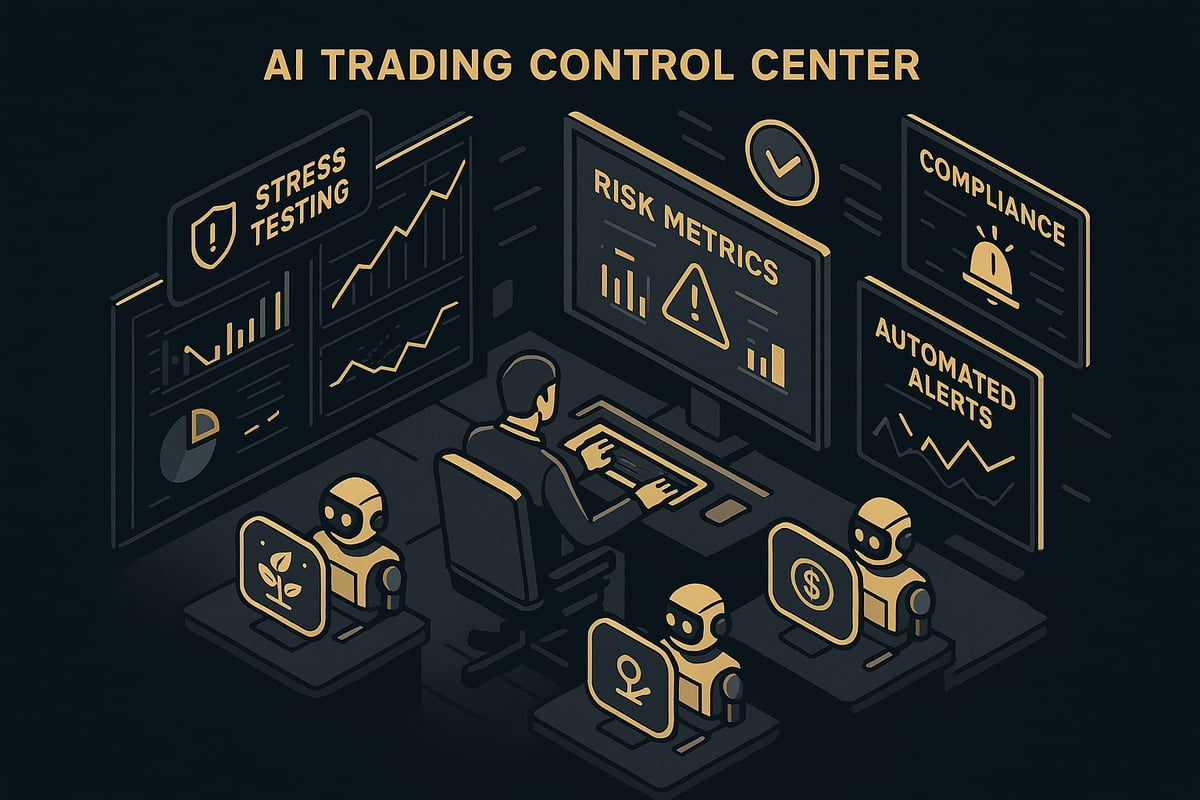
Mastering risk management in ai trading is essential for long-term success. Automated systems offer speed and precision, but without robust controls, they can magnify losses just as quickly as gains. A well-structured approach to risk safeguards your capital, helps you navigate volatility, and builds confidence in your trading strategies.
Risk Controls and Real-World Lessons
Effective risk controls are the backbone of any ai trading system. At the core, you need clear stop-loss rules, careful position sizing, and a diversified portfolio. These elements prevent a single bad trade from derailing your entire operation.
History offers hard lessons. Overfitting, where ai trading models learn noise rather than signal, can lead to disastrous losses when market conditions change. Model drift is another risk, the model’s performance degrades over time as market dynamics evolve. Flash crashes, sudden and severe market drops, have exposed the dangers of unchecked automation.
Consider Udacity’s backtesting module, which lets traders measure risk-adjusted returns and drawdowns before going live. Backtesting reveals hidden vulnerabilities and helps you refine controls before risking real capital. For a deeper dive into frameworks, explore this Risk Management in AI Trading guide.
Statistical Risk Metrics and Stress Testing
Quantifying risk is crucial in ai trading. Relying on statistical metrics allows you to identify weaknesses and prepare for unexpected market events. Common measures include volatility, Value at Risk (VaR), and expected shortfall.
Here’s a quick comparison:
| Metric | What It Measures | Use Case |
|---|---|---|
| Volatility | Price fluctuation range | Daily risk estimation |
| VaR | Max loss over time at confidence | Portfolio risk limits |
| Expected Shortfall | Average loss beyond VaR | Extreme scenario planning |
Scenario analysis and stress testing simulate market shocks, such as sudden liquidity drops or black swan events. These tools reveal how your ai trading strategies might perform under extreme pressure. Udacity’s curriculum emphasizes scenario modeling to ensure that strategies are robust, not just lucky.
Psychological, Regulatory, and Community Best Practices
Even in automated ai trading, human psychology remains a factor. Overconfidence, fear of missing out, and loss aversion can influence decision-making, especially when monitoring live trades. Setting automated alerts and predefined risk protocols helps minimize emotional interference.
Regulatory compliance is non-negotiable. In 2026, ai trading systems must adhere to KYC (Know Your Customer) and AML (Anti-Money Laundering) standards. Staying updated on evolving laws is vital, as authorities continue to refine guidelines for transparency and accountability in automated trading.
Best practices include:
- Regularly reviewing strategies for model drift and market adaptation.
- Participating in trading forums and peer review groups for feedback.
- Documenting all trading logic and compliance checks.
- Leveraging community insights to spot emerging risks or opportunities.
A culture of continuous learning is essential. The most successful ai trading practitioners monitor performance, refine models, and collaborate with others to stay ahead. By combining robust controls, objective metrics, and a supportive community, you can navigate automated markets with confidence and resilience.
The Future of AI Trading: Trends and Predictions for 2026 and Beyond
Imagine a world in 2026 where ai trading bots execute the majority of trades for both retail and institutional investors. This vision is quickly becoming reality as the market for ai trading platforms is projected to reach $69.95 billion by 2034, according to AI Trading Platform Market Growth. The scale and influence of automated systems are reshaping global financial markets, making ai trading an essential tool for modern traders.
Widespread Adoption and Market Impact
By 2026, ai trading adoption is expected to surge, with bots managing a majority of trading volume across stocks, forex, crypto, and indices. Institutions and retail traders alike are leveraging automated strategies to gain a competitive edge. This shift is fueled by increased computational power and vast data availability, allowing ai trading systems to operate globally with unmatched efficiency.
The market’s rapid growth also brings new opportunities for diversification and risk management. As more traders rely on ai trading, platforms are evolving to support real-time analytics, multi-asset portfolios, and seamless integration with brokerage services.
Technological Innovations in AI Trading
Technological advancements are transforming ai trading from basic automation to highly intelligent, adaptive systems. Deep reinforcement learning enables bots to learn optimal strategies through trial and error, while agentic AI allows multiple trading agents to coordinate and make complex decisions.
Recent research, such as the Orchestration Framework for Financial Agents, highlights the shift towards collaborative, multi-agent environments. These innovations empower ai trading bots to process alternative data sources like satellite imagery, news sentiment, and social signals, enhancing prediction accuracy and responsiveness.
Table: Key Innovations in AI Trading
| Innovation | Impact |
|---|---|
| Deep RL | Adaptive, self-improving strategies |
| Agentic AI | Multi-agent coordination |
| Alternative Data | Enhanced signal generation |
| Real-time Automation | Faster execution, lower latency |
The Democratization of AI Trading
The democratization of ai trading is making advanced tools accessible to a broader audience. Platforms now offer plug-and-play bots that require little to no coding expertise, enabling both novice and experienced traders to harness AI-driven strategies.
Companies like Tickeron and educational programs such as Udacity’s AI trading curriculum are lowering the barriers to entry. Traders can now experiment with sophisticated models and backtesting tools, fostering innovation and participation across the trading community.
Transparency, Education, and Community
As ai trading becomes more prevalent, transparency and explainability are gaining importance. Traders and regulators demand insight into how AI models make decisions. The rise of explainable AI tools and open-source frameworks supports clearer understanding and trust.
Education is also evolving. Programs like Udacity’s AI trading course, now eligible for MSc credits, reflect the growing professionalization of the field. adaptive trading communities are emerging, where strategies are developed collaboratively, insights are shared, and best practices are established.
Future Challenges and Opportunities
Despite its promise, ai trading faces several challenges ahead. Regulatory scrutiny is intensifying as authorities seek to ensure fairness, prevent market manipulation, and address ethical concerns. Innovators must also manage risks associated with model drift, data privacy, and system robustness.
Predictions indicate continued double-digit annualized returns for top-performing bots and a surge in demand for AI trading specialists, with an estimated 54,350 new jobs by 2029. Staying ahead will require ongoing education, adaptation, and a commitment to responsible innovation.
As you’ve seen in this guide, mastering AI trading in 2026 means having the right tools to cut through market noise and act decisively. PipTrend gives you the power to spot opportunities with real time, reliable signals, so you can execute trades confidently across forex, crypto, stocks, and more. If you’re ready to put what you’ve learned into practice and see measurable improvements in your trading results, there’s no reason to wait.
See Your Trading Improve With PipTrend
Explore how clear signals and instant alerts can help you trade smarter and stay ahead in the fast moving world of automated markets.
Risk Disclaimer: Trading involves risk. Past performance doesn't guarantee future results. Only trade with money you can afford to lose. PipTrend is a tool to assist your trading decisions, not financial advice.